Underground Grease Trap for Construction Site Canteens | Environmental Solution for Wastewater Treatment

As standards for civilized construction and integrated control of dust and wastewater continue to rise, the treatment of wastewater from temporary construction site canteens has become a key inspection item for project completion acceptance, routine environmental checks, and "civilized construction site" evaluations. These canteens serve a high volume of workers with concentrated discharge during three daily meals; the wastewater is characterized by high oil and grease content and a mixture of food scraps—such as noodles, vegetable leaves, and meat residues. Traditional, simple brick-built grease traps suffer from significant treatment limitations, creating management challenges for project teams.
I. Two Major Management Pain Points of Traditional Grease Traps
1. Occupation of valuable construction site space
Open space on construction sites is limited; placing grease traps on the ground encroaches on areas needed for material storage, vehicle access, and temporary activities. Site planning becomes difficult, and some cramped sites may lack the space to install such equipment altogether.
2. Poor separation efficiency leading to pipe blockages and penalties
Wastewater from site canteens has a higher oil concentration than that of typical commercial restaurants. Simple sedimentation tanks can only capture large solid particles and fail to effectively separate grease; the resulting solidified grease frequently clogs municipal sewage networks.

II. Advantages of Underground Grease Traps for Canteens and Food Service Facilities
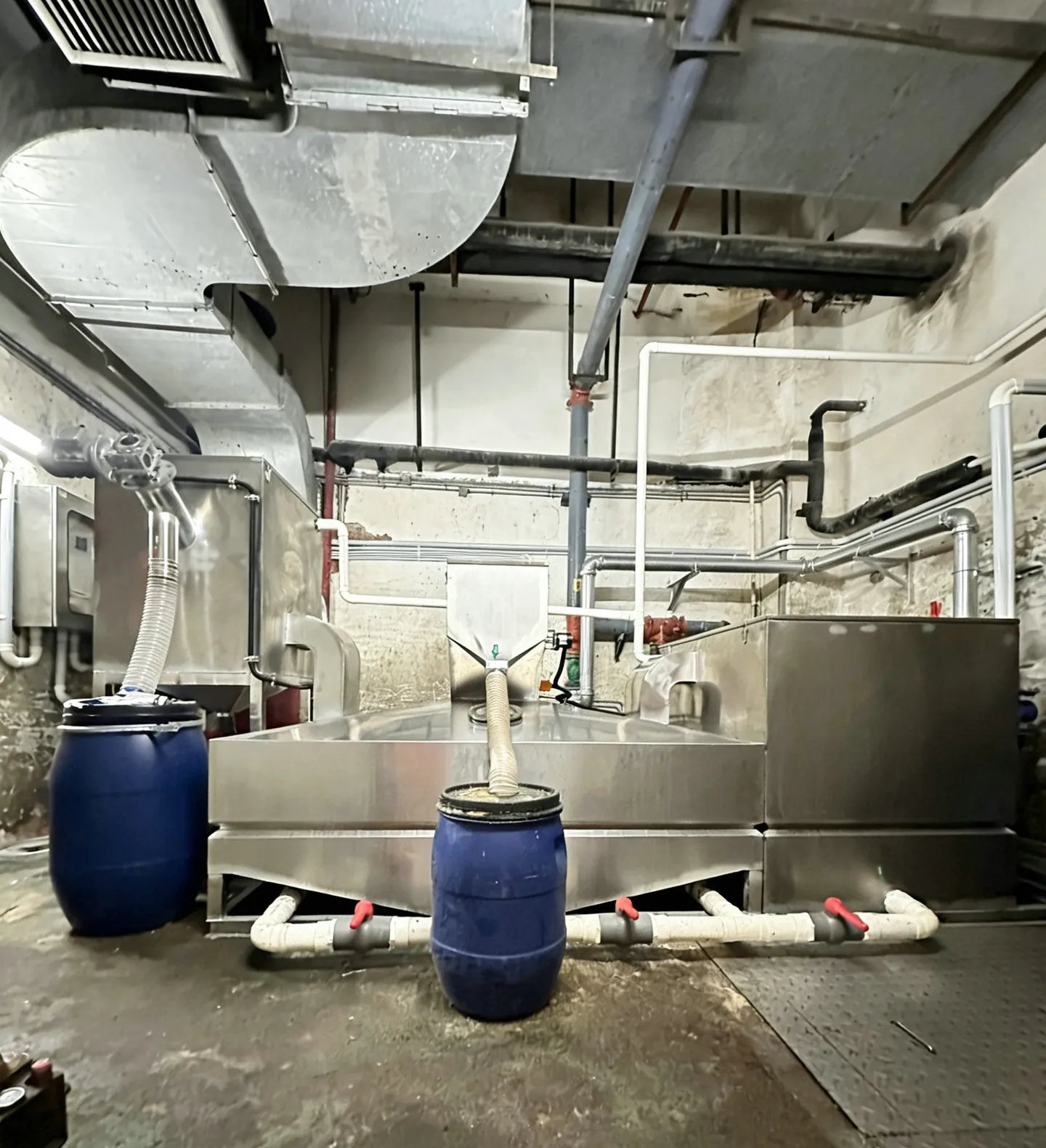
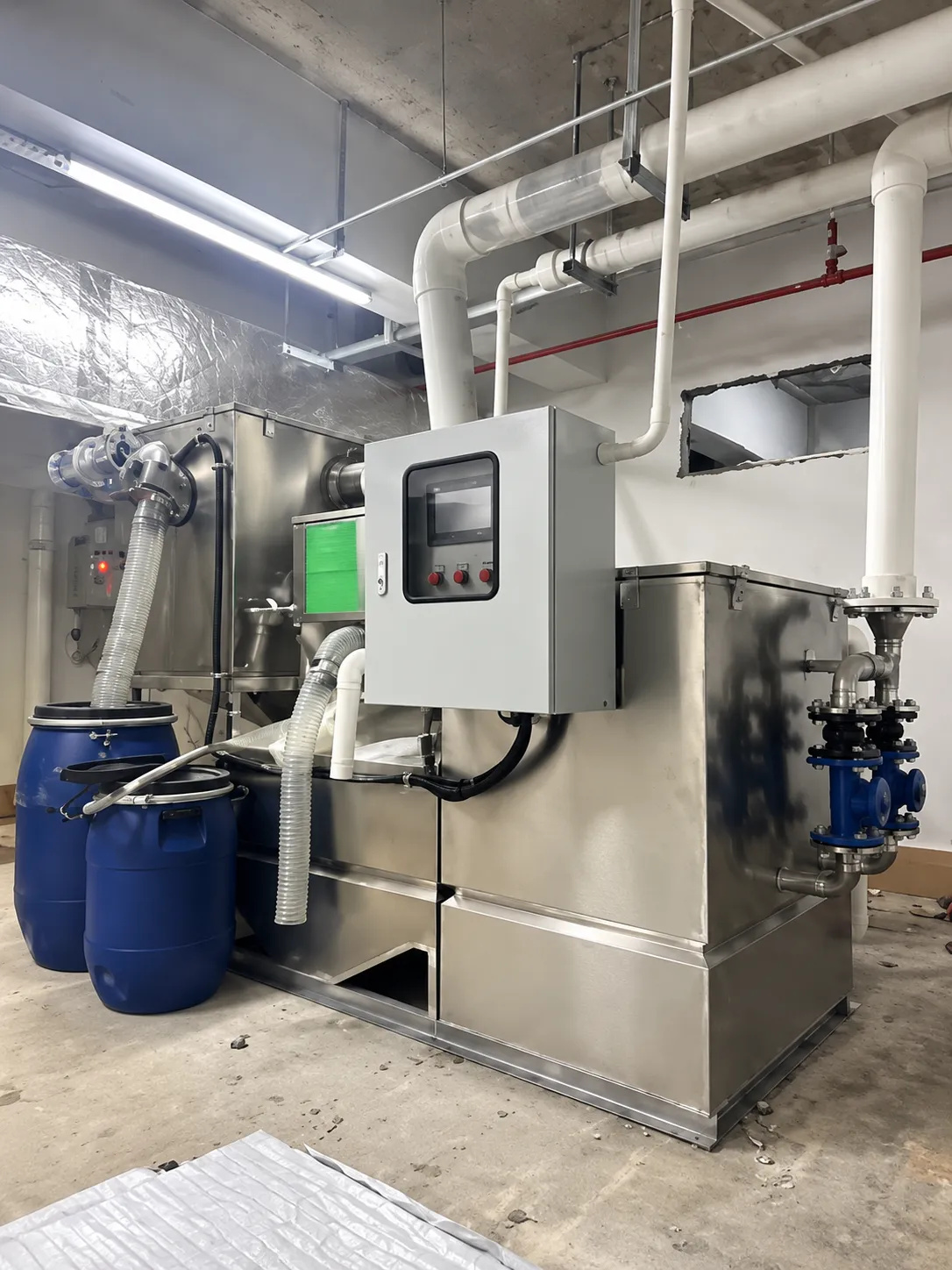
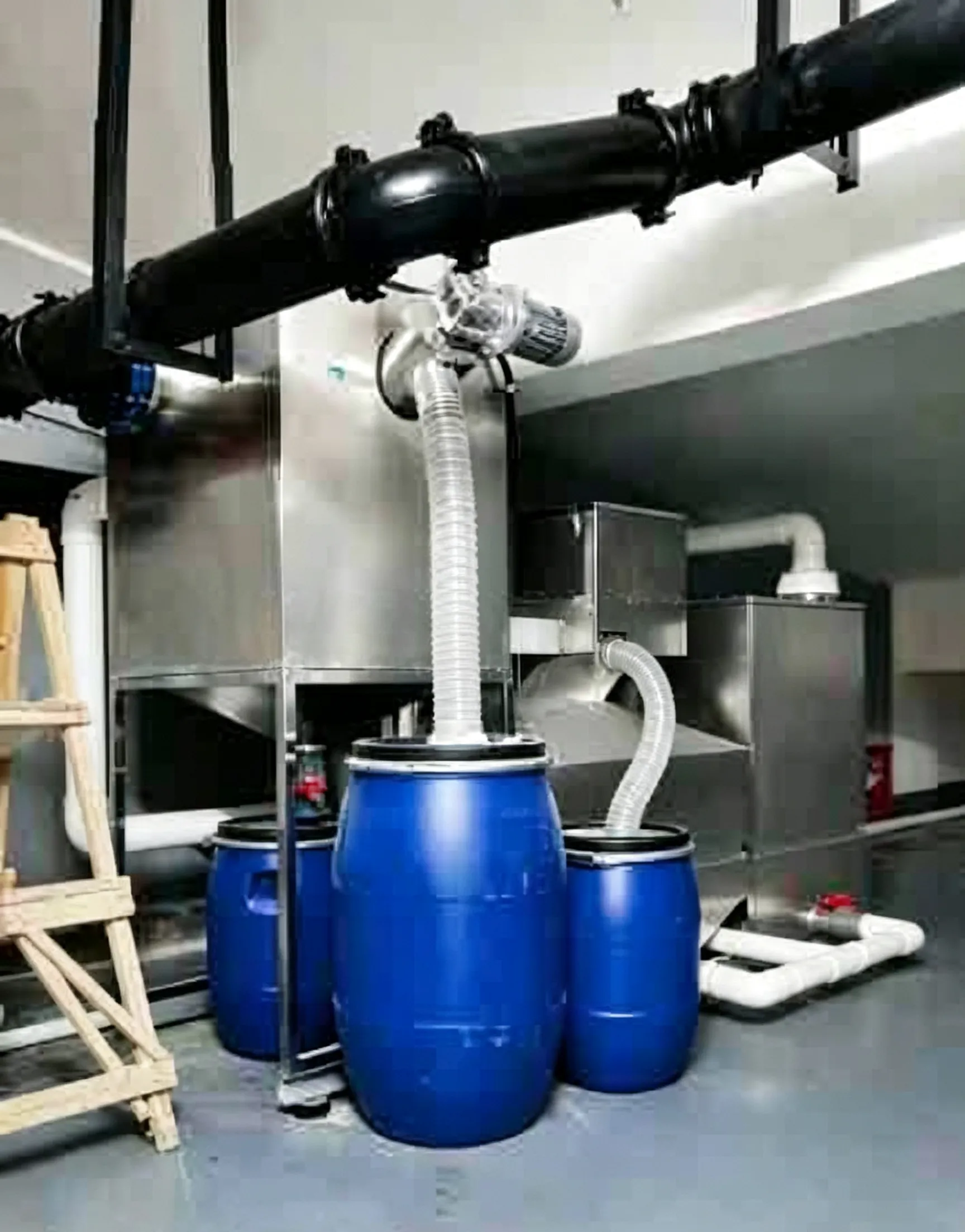
Designed specifically for temporary construction site canteens, underground grease traps feature a fully buried installation and are constructed from stainless steel. They integrate automatic screen-based debris removal and oil-water separation (requiring manual oil skimming) and are tailored to the drainage conditions of temporary sites, effectively overcoming the shortcomings of traditional facilities.
1. Fully underground installation; zero ground space occupation
The entire unit is buried underground—typically beneath outdoor green belts or alongside roadways—leaving areas for material storage, vehicle access, and modular site buildings unobstructed. This makes them ideal for the space-constrained environments of construction sites without interfering with the overall site layout.
2. Easy-to-maintain materials
The main body is made of stainless steel, offering corrosion resistance and easy cleaning;
3. Multi-stage separation process for stable treatment of high-grease wastewater
The unit features a built-in mechanical screen to automatically intercept large debris such as rice, bones, and vegetable scraps. It utilizes the density difference between oil and water to separate floating grease. The separation structure is reinforced to handle the high-grease wastewater typical of construction site canteens, ensuring high grease interception efficiency, significantly reducing the risk of pipeline clogs, and guaranteeing compliant wastewater discharge.
4. Corrosion-resistant and durable; suitable for complex site conditions
Designed for stable operation over typical 3–5 year construction cycles. The unit is easy to assemble and disassemble; upon project completion, it can be hoisted and relocated to the next site for reuse, offering excellent cost-effectiveness.
III. Installation process for underground grease traps in site canteens
1. Excavate the pit on-site, allowing sufficient clearance around the unit's dimensions for maintenance and operation; reinforce the pit bottom with a load-bearing concrete base;
2. Lower the unit into the pit and connect the canteen kitchen's discharge pipe to the municipal sewer network;
3. No electrical connection required; simply connect the inlet and outlet pipes to begin operation. A sewage lifting system can be added downstream if necessary;
IV. Key considerations for equipment selection
1. Matching flow rate to the number of diners:

2. Site condition assessment:
Survey the underground space outside the canteen in advance to determine excavation depth and underground utility layouts, ensuring avoidance of power cables and main water supply/drainage pipes;
3. Material selection based on usage duration:
For short-term (1–2 year) small-scale sites, an anti-corrosive carbon steel underground grease trap is suitable; for long-term projects (3+ years), a 304 stainless steel model is recommended for superior corrosion resistance and a longer service life;
4. Discharge elevation check:
If canteen wastewater can flow by gravity, select the standard underground model; if the site elevation is lower than the sewer network, the unit can be paired with an external lifting pump.
V. One-stop support services for construction sites
To meet wastewater treatment needs for canteens at new building projects, municipal roadworks, and industrial park construction sites, the manufacturer offers comprehensive services including site surveys, pit dimensioning and design, equipment supply, guidance on hoisting and installation, and provision of acceptance documentation. The equipment comes with an environmental inspection report and a certificate of conformity, helping the project team successfully pass inspections for "civilized construction sites" and environmental compliance, while providing a one-stop solution for managing grease and wastewater from the site canteen.