Fully Automated Integrated Grease Trap: Enabling Low-Cost, Compliant Operations for Hotel Kitchens

In the context of routine hotel operations, kitchen wastewater management is a critical yet often overlooked link that directly impacts cost control, environmental quality, and regulatory compliance. The kitchen operations of star-rated hotels, business resorts, and boutique chains are complex, encompassing diverse scenarios such as à la carte dining, large-scale banquets, conference catering, and buffets. These operations are characterized by concentrated discharge periods, complex grease compositions, and high levels of suspended solids.
Traditional, rudimentary grease separation facilities often suffer from issues such as the need for frequent cleaning, incomplete separation, strong odors, and poor adaptability. Long-term use not only drives up facility maintenance costs but also creates risks such as non-compliant wastewater discharge, pipe blockages and backflow, and unsanitary kitchen conditions. With advantages including system integration, a sealed design, intelligent operation, and low maintenance requirements, the Tieshanyuan intelligent integrated automatic grease trap has become the ideal solution for standardized, regulated wastewater pre-treatment in modern hotel kitchens.
I. Long-term Operational Pain Points of Traditional Hotel Grease Separation Methods
Unlike standard street-side eateries, hotels operate in environments characterized by round-the-clock activity, significant fluctuations in volume, and high standards for wastewater discharge. The drawbacks of outdated grease separation methods are continuously amplified in this context:
1. High Costs of Manual Maintenance
Traditional open-style grease traps require facility staff to frequently remove sludge and grease and wash the tank. Grease accumulates rapidly, especially during peak banquet periods, resulting in a heavy cleaning workload and significant long-term expenditure on labor hours and cleaning supplies.
2. Hidden Losses Driving Up Operational Expenses
Grease and food residue that are not fully separated adhere to the inner walls of the piping network. Over time, this causes pipe constriction and blockages, necessitating professional unclogging and repairs—creating a substantial, hidden long-term expense for hotel facilities management.
3. Impact of Kitchen Environment on Service Quality
Open grease storage and sludge accumulation easily lead to foul odors and pest infestations. Odors spreading to kitchen workspaces and service corridors compromise the working environment for staff and indirectly detract from the hotel's image of refined, professional management.
4. High pressure from routine environmental inspections
Urban sewage discharge regulations are becoming increasingly rigorous and routine. As key targets for discharge inspections, hotels often struggle with aging, rudimentary grease traps that yield inconsistent separation results and fluctuating water quality, leading to pressure regarding mandatory rectifications and follow-up inspections.
II. Intelligent Integrated Grease Trap: Core Value for Long-Term Hotel Operations
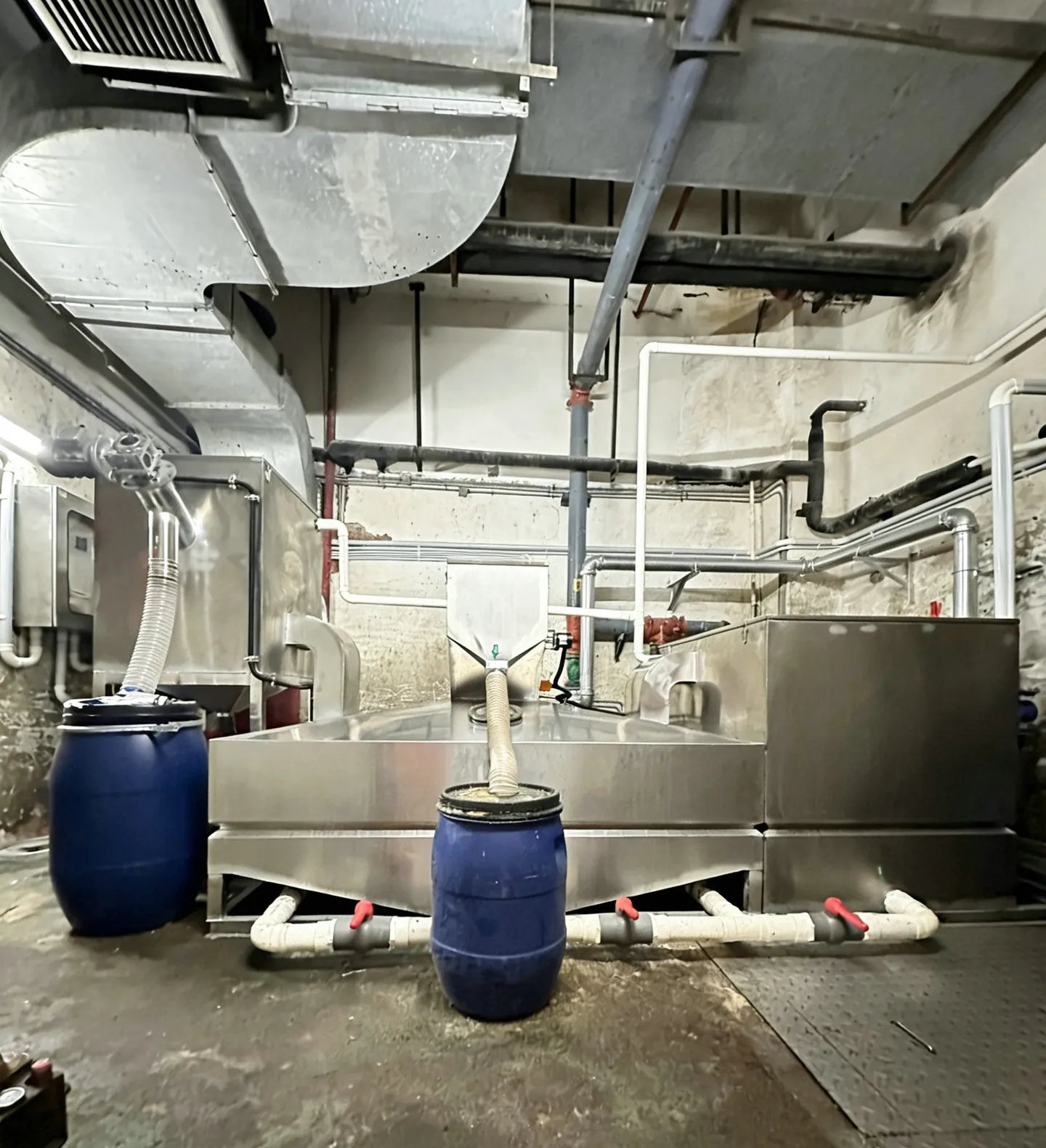
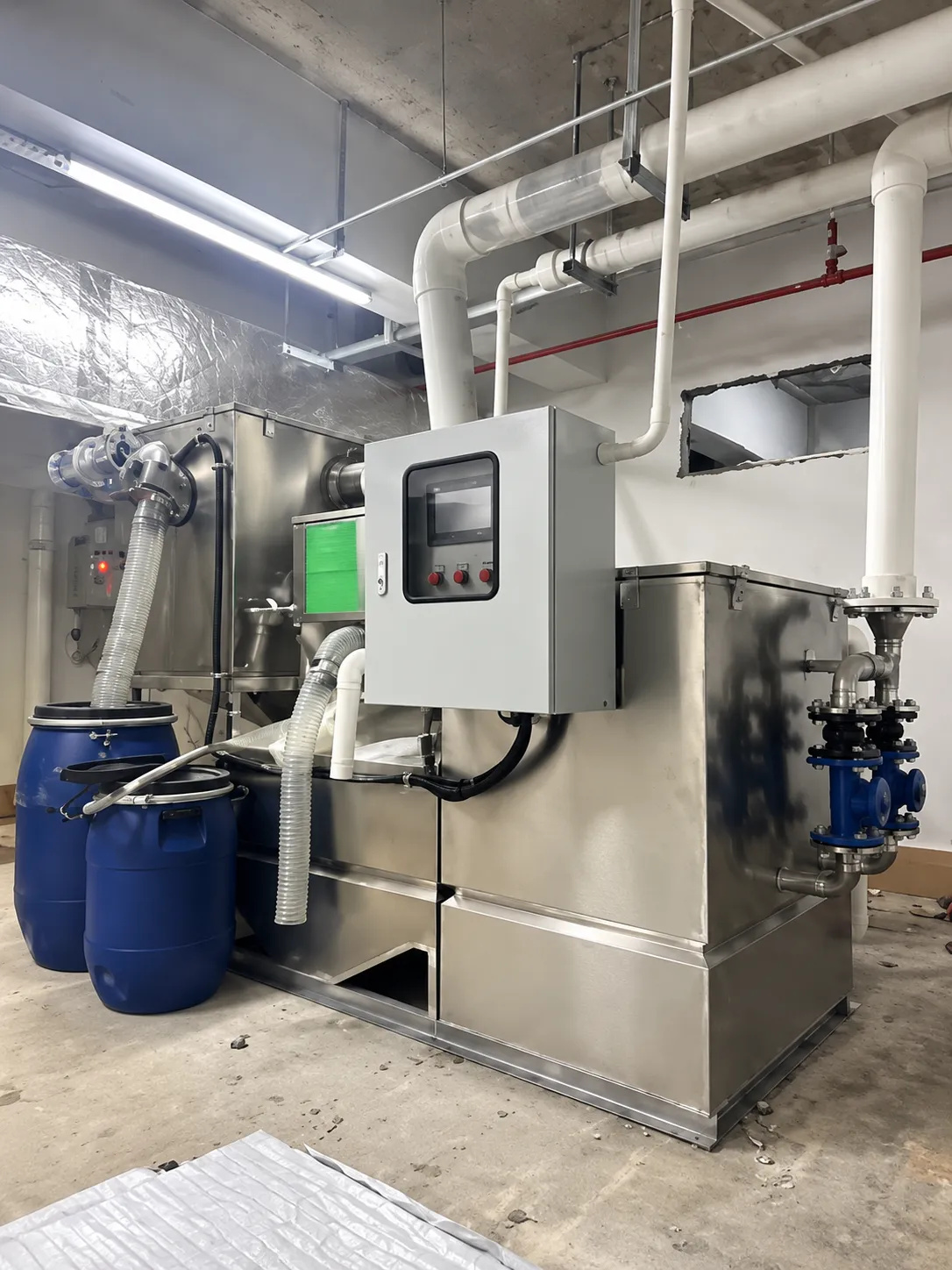
Addressing the four core needs of long-term hotel operation—low labor requirements, stable compliance, environmental protection, and operational efficiency—the Tieshanyuan integrated grease trap overcomes the limitations of traditional equipment (which often lacks versatility and relies heavily on manual labor). It combines slag removal, oil-water separation, and sewage lifting into a single unit, suitable for installation in various locations, including above-ground areas and basements.
1. Fully enclosed structure, supporting refined environmental management
The unit features a fully enclosed, seamless stainless steel structure that contains odors at the source, meeting high hotel standards for kitchen cleanliness, back-of-house environments, and air quality in public areas.
2. Intelligent, automated operation, significantly reducing labor needs
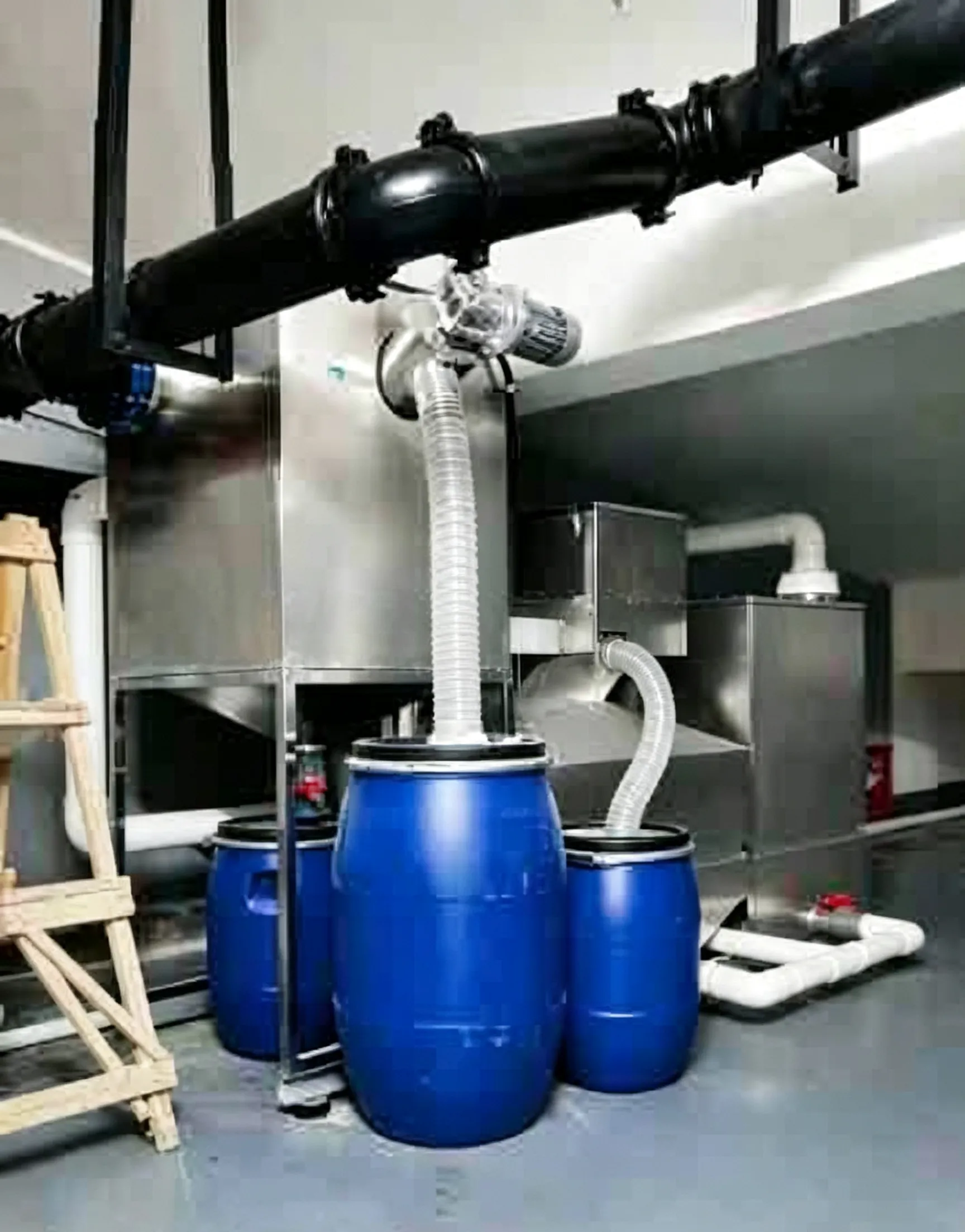
Equipped with an intelligent control system, the device automates slag removal (via screen), maintains constant temperatures to prevent grease solidification, scrapes and discharges grease, and manages start/stop cycles based on liquid levels. Routine maintenance requires only the periodic removal of collected grease, slag, and sludge, drastically cutting labor costs for property and facilities management.
3. Multi-stage precision separation, handling complex, high-grease hotel wastewater
Designed to handle the mixed, high-grease wastewater typical of hotel kitchens—including stir-frying, deep-frying, braising, and buffet operations—the system employs a multi-stage separation process. A constant-temperature heating system prevents grease from clumping or adhering due to low temperatures, effectively separating both floating grease and fine grease particles. This ensures stable, compliant effluent quality, protects municipal sewer networks at the source, and eliminates pipeline clogging issues.
4. Strong operational adaptability, compatible with diverse hotel layouts
The equipment supports installation in above-ground areas as well as basements ranging from Level -1 to Level -4. Its built-in stable lifting and transport function solves the challenge of draining water from basements where gravity-fed drainage is impossible. Additionally, flow capacities can be customized to match specific drainage volumes and available mechanical room space.
5. Stable, compliant operation, mitigating business risks
With consistent oil-water separation efficiency that meets municipal sewage discharge standards, the system helps hotels maintain routine compliance with discharge regulations and avoid the risks associated with mandatory rectifications.
III. Long-term Benefits of Integrated Grease Traps for the Hotel Industry
While many hotels view grease separation equipment merely as basic infrastructure, it is actually an essential operational asset that requires low initial investment yet yields long-term cost savings:
1. Reduced Labor Costs: Fully automated operation minimizes repetitive tasks for cleaning and maintenance staff, thereby cutting labor expenses;
2. Lower Maintenance Costs: By intercepting grease and food residue at the source, the equipment drastically reduces costs associated with pipe unclogging, network repairs, and emergency equipment fixes;
3. Environmental Protection: Sealed designs prevent odors and elevate the standard of precision management within utility areas;
IV. Standardized Support Services Tailored for New Builds and Renovations
We offer comprehensive, one-stop support services—including site surveys, operational suitability assessments, sizing and selection, customized solutions, technical coordination, and after-sales warranties—for new hotel construction, kitchen upgrades, and the replacement of aging equipment.
Equipment is supplied with complete documentation for acceptance inspections, facilitating compliance checks and ensuring standardized, eco-friendly, and compliant operations for hotel facilities.