Fully Automated Oil-Water Separation Solution for Multi-Tenant Food Court Wastewater in Commercial Complexes

As urban commercial infrastructure and environmental regulations continue to evolve, large commercial complexes, hotels, and shopping malls often feature underground food courts hosting a wide array of dining establishments—ranging from Chinese cuisine and hot pot to light meals and barbecue. Managing the oily wastewater generated by the simultaneous operation of these multiple outlets has become a key priority for property management. Traditional, rudimentary grease traps struggle to handle the high-volume, multi-source drainage conditions typical of these complexes. Consequently, Tieshanyuan’s integrated, fully automated oil-water separation and lifting systems are increasingly becoming the standard choice for kitchen wastewater pre-treatment across various settings.
I. Challenges in Wastewater Treatment for Multiple Dining Outlets in Commercial Complexes
1. High Fluctuations in Drainage Flow and Complex Contaminants
With dozens of outlets operating simultaneously in the food court, instantaneous drainage volume spikes during peak lunch and dinner hours. Wastewater from hot pot, Sichuan cuisine, and barbecue vendors often has high grease concentrations and contains debris such as rice, vegetable scraps, and seasonings. Standard grease traps clog easily, necessitating frequent pipe clearing and increasing the workload for property maintenance teams.
2. Installation Constraints in Underground Levels; Gravity Drainage Impossible
Dining facility utility rooms are often located in underground basements where the floor level is lower than the municipal sewer network. Simple grease traps cannot transport treated wastewater to the external network, leading to risks such as wastewater accumulation and backflow.
3. Odor Spread Affecting the Shopping Environment
Traditional brick-built grease traps offer limited sealing capabilities. Odors generated by decomposing grease can easily spread to parking garages, corridors, and customer areas, triggering complaints from customers and tenants and undermining the overall shopping environment.
4. Strict Environmental Compliance Standards
Municipal regulations clearly mandate that oily wastewater from dining establishments must undergo pre-treatment to meet specific standards before discharge into the sewer network. Small, decentralized, and rudimentary equipment often yields poor separation results, making it difficult to consistently meet long-term inspection standards and creating a risk of mandatory rectification orders.
II. Key Advantages of Using Fully Automatic Oil-Water Separators in Commercial Complexes
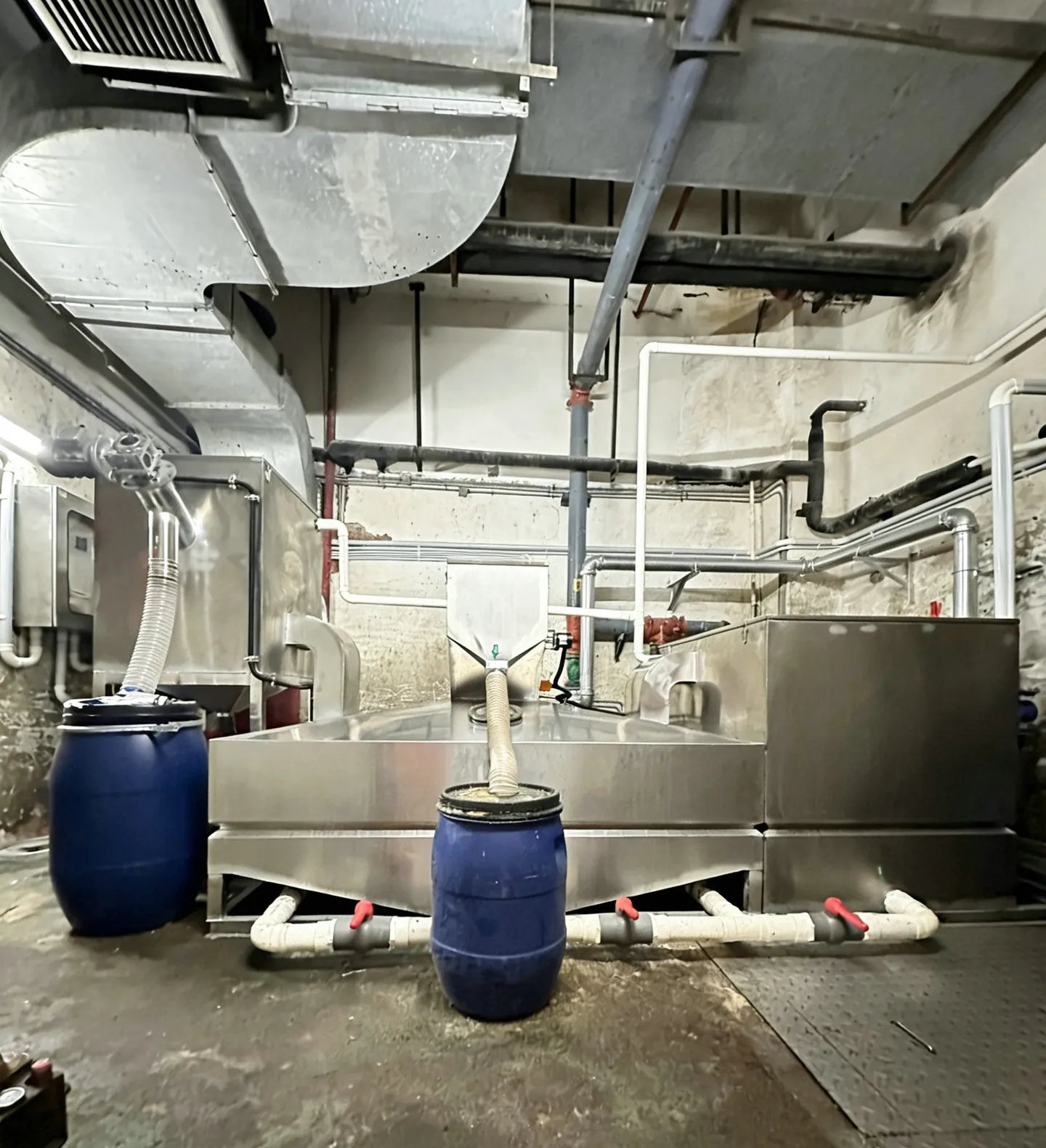
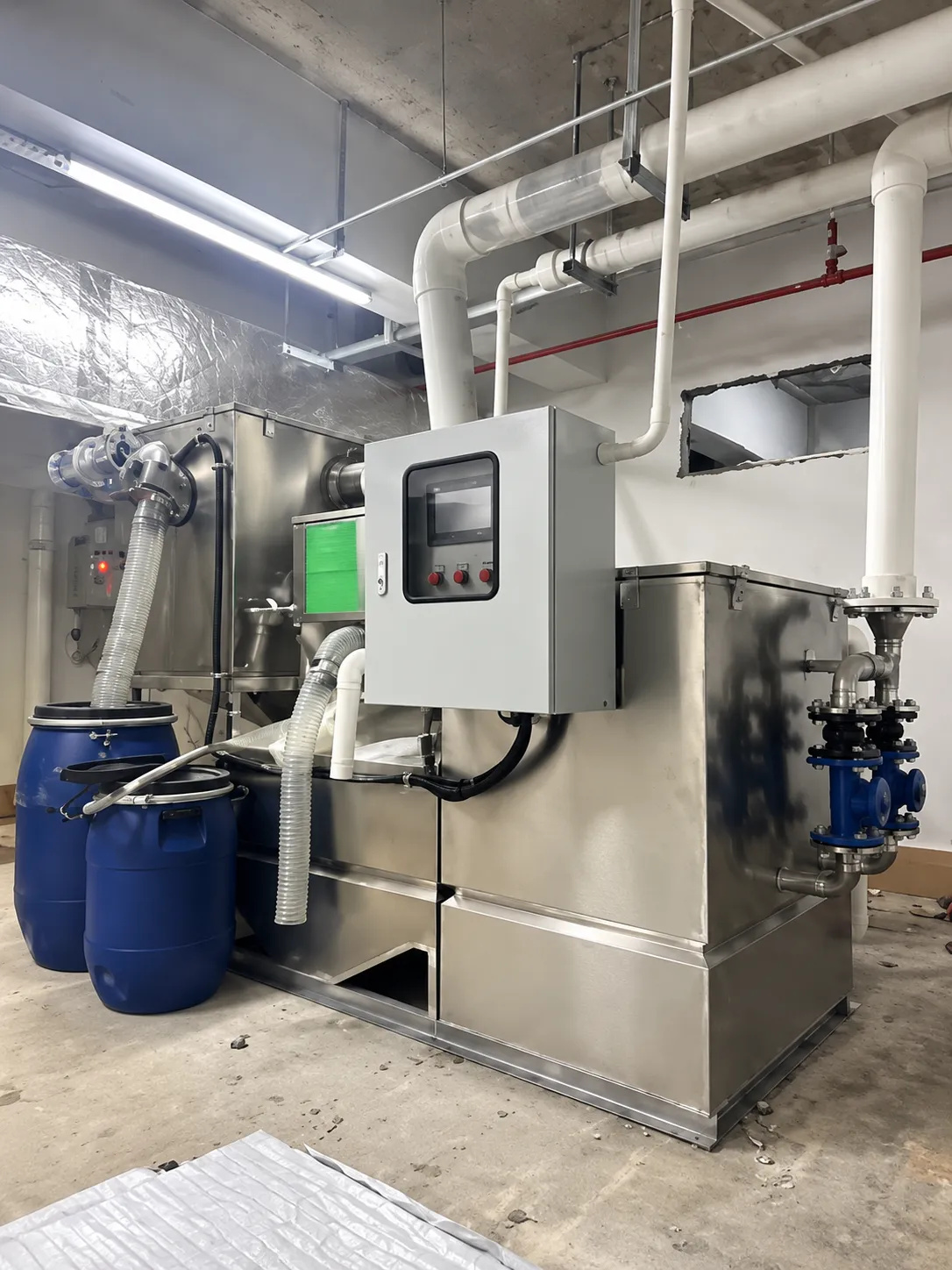
Tieshan Environmental Protection’s fully automatic integrated oil-water separation equipment is designed for scenarios involving centralized drainage from multiple tenants in shopping malls. It integrates multiple functions—including automatic slag removal, automatic grease skimming and discharge, constant temperature control, sewage lifting, and intelligent control—making it suitable for installation in low-level mechanical rooms, such as basement levels.
1. Fully sealed 304 stainless steel housing prevents odor leakage
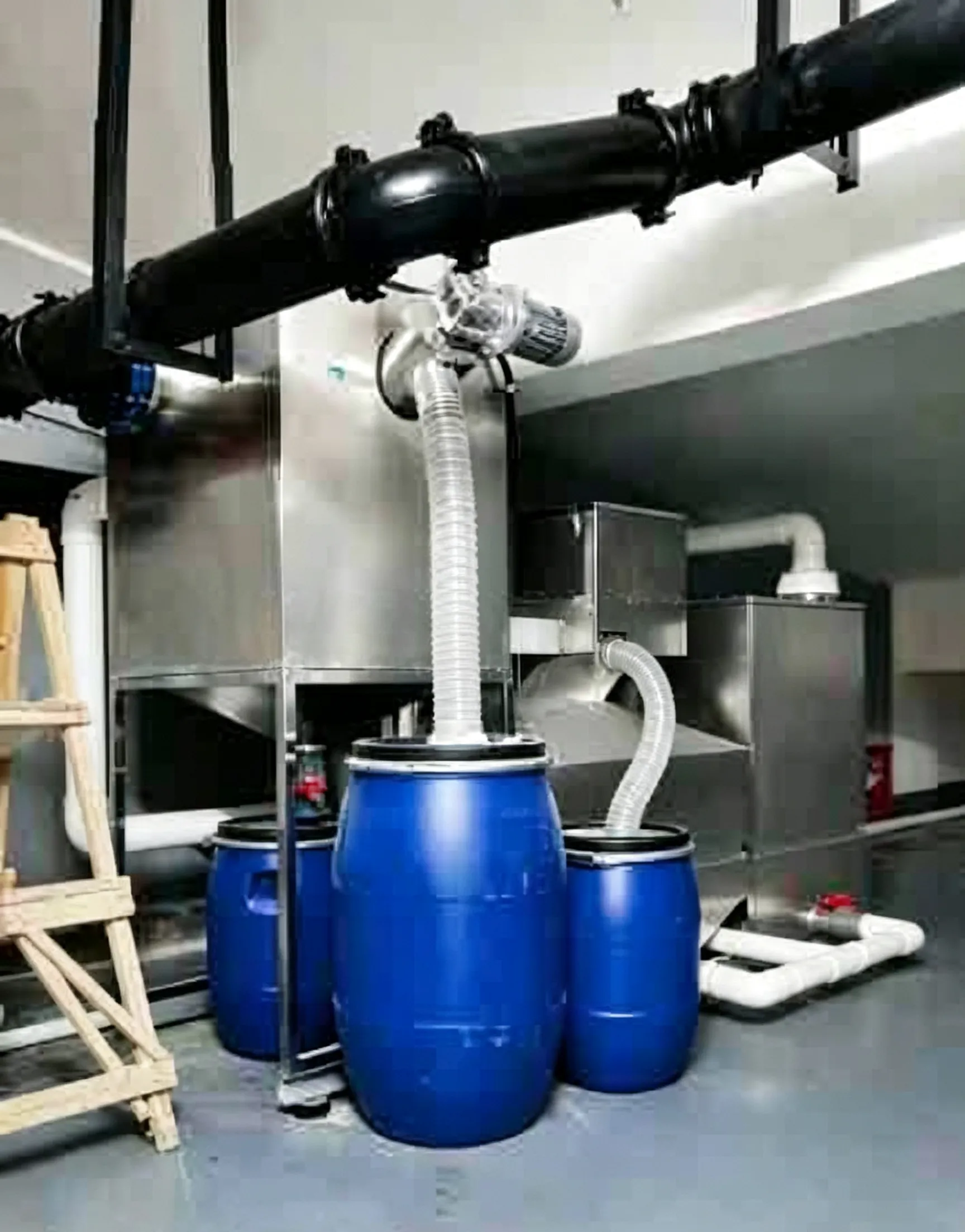
The unit features a welded, one-piece SUS304 stainless steel body; grease and food residue are automatically discharged into collection containers, meeting the strict environmental standards required for public areas in shopping malls.
2. Fully automatic operation reduces the burden of manual maintenance
The equipment is equipped with an automatic screen to capture food residue and a timed skimming mechanism to scrape grease into collection drums. Liquid level sensors coordinate with the lifting pump for automatic start/stop, eliminating the need for constant on-site monitoring.
3. Built-in constant-temperature heating components prevent grease solidification
To address the issue of grease clumping at low temperatures—common in hotpot and heavy-oil catering—the separation zone is equipped with a heating device. This maintains a stable water temperature, preventing animal fats from solidifying and adhering to the tank walls or piping, thereby ensuring stable separation performance in cold conditions.
4. Integrated grease separation and lifting solves underground drainage challenges
The unit features a built-in sewage lifting zone; once slag and grease have been removed, the wastewater is automatically pressurized and pumped into the municipal sewer network.
5. Modular and customizable design adapts to complex layouts
Models can be customized based on the number of tenants, hourly drainage volume, and the dimensions of the mechanical room. Options range from a single high-capacity unit for centralized processing to multiple units connected in parallel for specific dining zones, accommodating shopping centers and food courts of various sizes. If access to the equipment room is restricted, the unit can be delivered in three sections and assembled on-site using quick connectors and bolts. It also features PLC remote control capabilities; by connecting to a smartphone or computer, users can monitor real-time operating status, receive fault alerts, and adjust function settings—all protected by password security.
III. Basic Operational Workflow of the Fully Automatic Oil-Water Separator
Wastewater collected from multiple dining establishments flows into the equipment's inlet. It first passes through a solid-liquid separation zone, where solid residues—such as food scraps and bones—are intercepted and retained in a sealed sludge collection bin.
The wastewater then enters the separation zone; utilizing the density difference between oil and water, the oil naturally floats to the surface, where an automatic skimming system scrapes it into an oil collection drum.
The clarified water flows into the lifting zone. Once the water level reaches preset thresholds (low, high, or alarm levels), the lifting pump activates automatically to discharge the treated wastewater into the outdoor municipal sewer network.
The equipment features a PLC touchscreen that displays real-time operating status and automatically issues alerts in the event of abnormal water levels or equipment malfunctions, enabling property management to promptly inspect and address issues.
IV. Equipment Sizing and Selection Reference (Commercial Complex Scenario)
Standard equipment selection is primarily based on the following four criteria:
1. Total number of dining establishments and peak hourly wastewater discharge volume;
2. Actual available installation space (length, width, and height) in the underground mechanical room;
3. Elevation of the municipal sewer network, used to calculate the required lift head for wastewater discharge;
4. Pre-designated locations for inlet and outlet piping and the width of maintenance access paths.
5. Check if the dimensions and total height of the equipment room entrance can accommodate the combined height of the forklift and the equipment (1.85–2.1 meters).
*Standard dimensions are as follows:
TS-GYT-10 2760*1500*1850mm (≈2.78L/S; width includes tank)
TS-GYT-20 3260*1500*1850mm (≈5.56L/S; width includes tank)
TS-GYT-30 3760*1500*1850mm (≈8.33L/S; width includes tank)
TS-GYT-40 4260*1520*1850mm (≈11.11L/S; width includes tank)
TS-GYT-50 4560*1420*2000mm (≈13.89L/S; width includes tank)
TS-GYT-60 5060*1420*2000mm (≈16.67L/S; width includes tank)
*Non-standard sizes available upon request: minimum width 900mm (excluding tank width)
*Front-mounted or rear-mounted lifting options available
*Water pump specifications determined by the installation level (basement floor number)
*Site drawings can be provided during the preliminary project stage; we will calculate flow rates and confirm appropriate equipment dimensions based on site conditions.
V. Comprehensive On-Site Services
For projects involving grease trap retrofitting in commercial complexes and hotels, or new installations in shopping malls, Foshan Tieshan Environmental Protection Technology Co., Ltd. offers one-stop services. These include equipment dismantling, sludge removal, waste transport, cleaning, piping removal, site surveys, solution design, sizing/selection, and technical coordination for installation. Our equipment is manufactured under ISO9001, ISO14001, and ISO45001 certifications, facilitating successful bidding and environmental discharge compliance inspections. Moving forward, we will continue to optimize our commercial catering water treatment equipment, providing stable and well-suited solutions for grease and wastewater treatment across diverse commercial projects, including shopping centers, food courts, and hotels.