Why Choose Integrated Grease Separation and Lifting Equipment for Food Service Projects? Principles and Sizing Guide

Integrated grease separation and lifting equipment is widely used in the commercial kitchens of hotels, restaurants, canteens, and commercial complexes. Many clients ask why such equipment is necessary for food service environments, how it operates, and how to determine the appropriate size; this article provides a brief overview.
Wastewater discharged from commercial kitchens contains a mixture of animal and vegetable fats/oils and food scraps. If discharged directly into the piping network, the grease tends to solidify and accumulate upon cooling, eventually causing blockages and increasing the frequency of maintenance and unclogging operations. In some projects, kitchens and equipment rooms are located in basements or lower levels (such as B1 through B4), where the site elevation is lower than that of the municipal sewer network. Consequently, wastewater cannot be discharged naturally via gravity. Standard grease traps only separate oil from water and lack pumping capabilities, making them unsuitable for low-level drainage requirements.
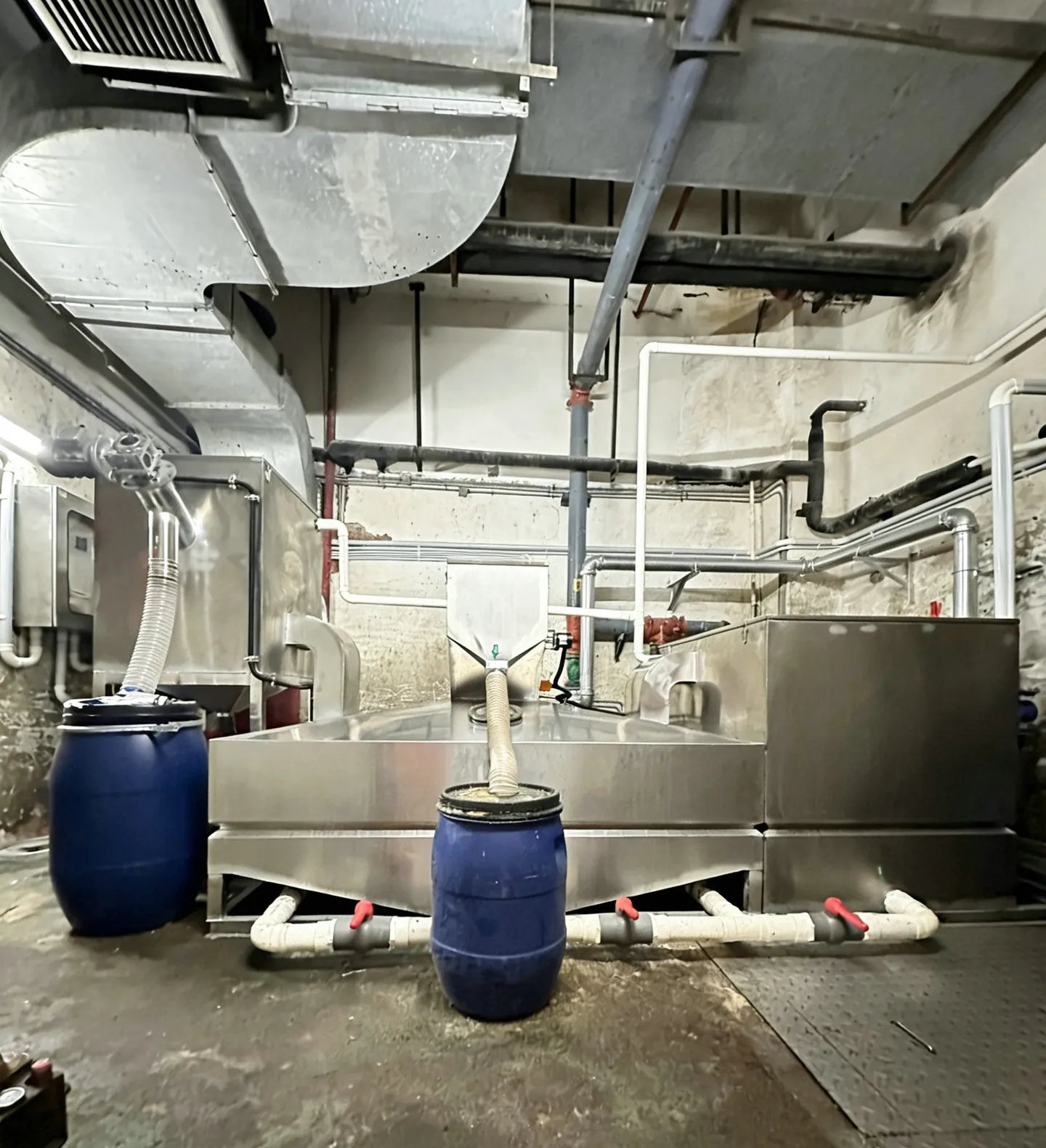
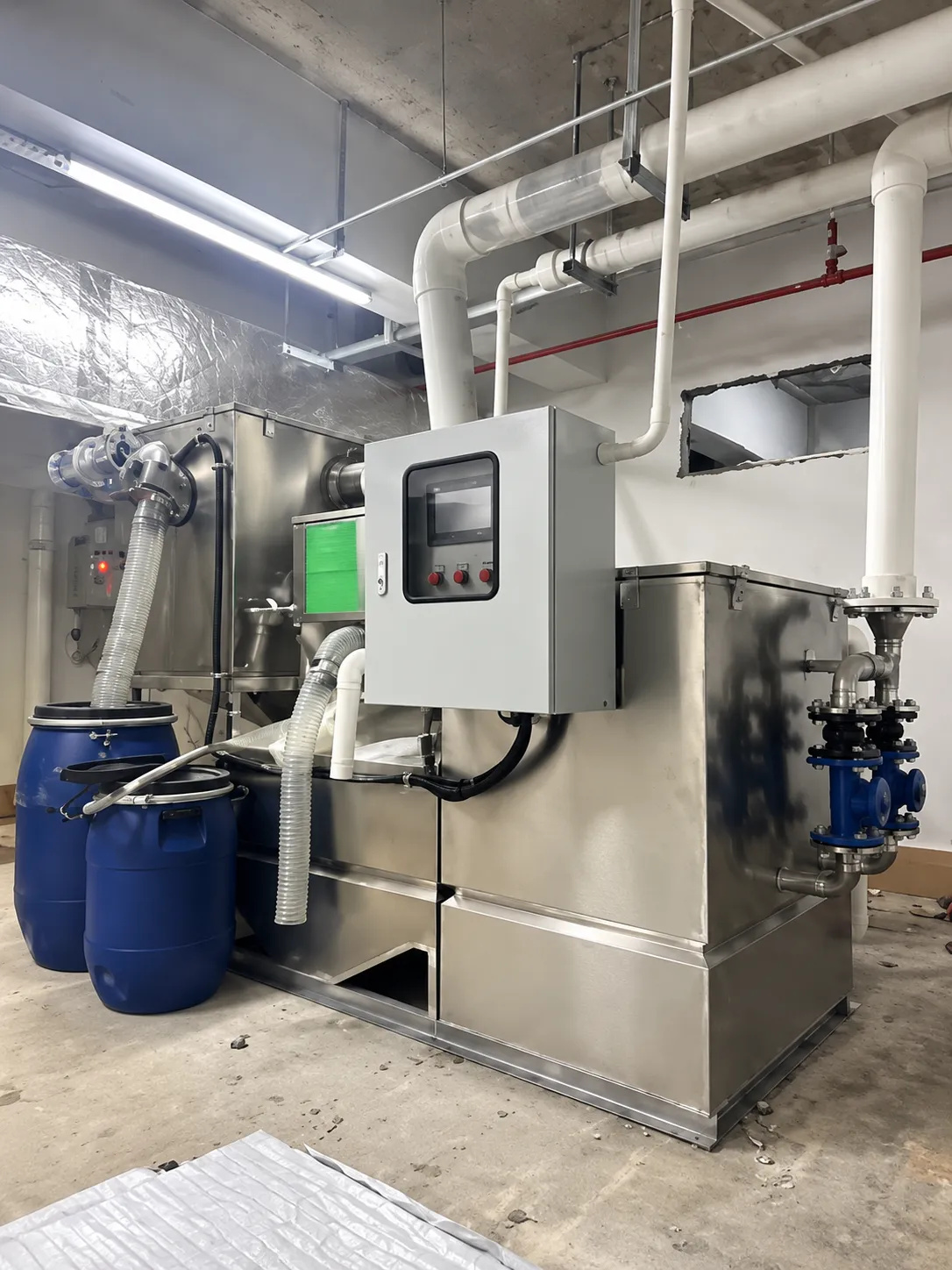
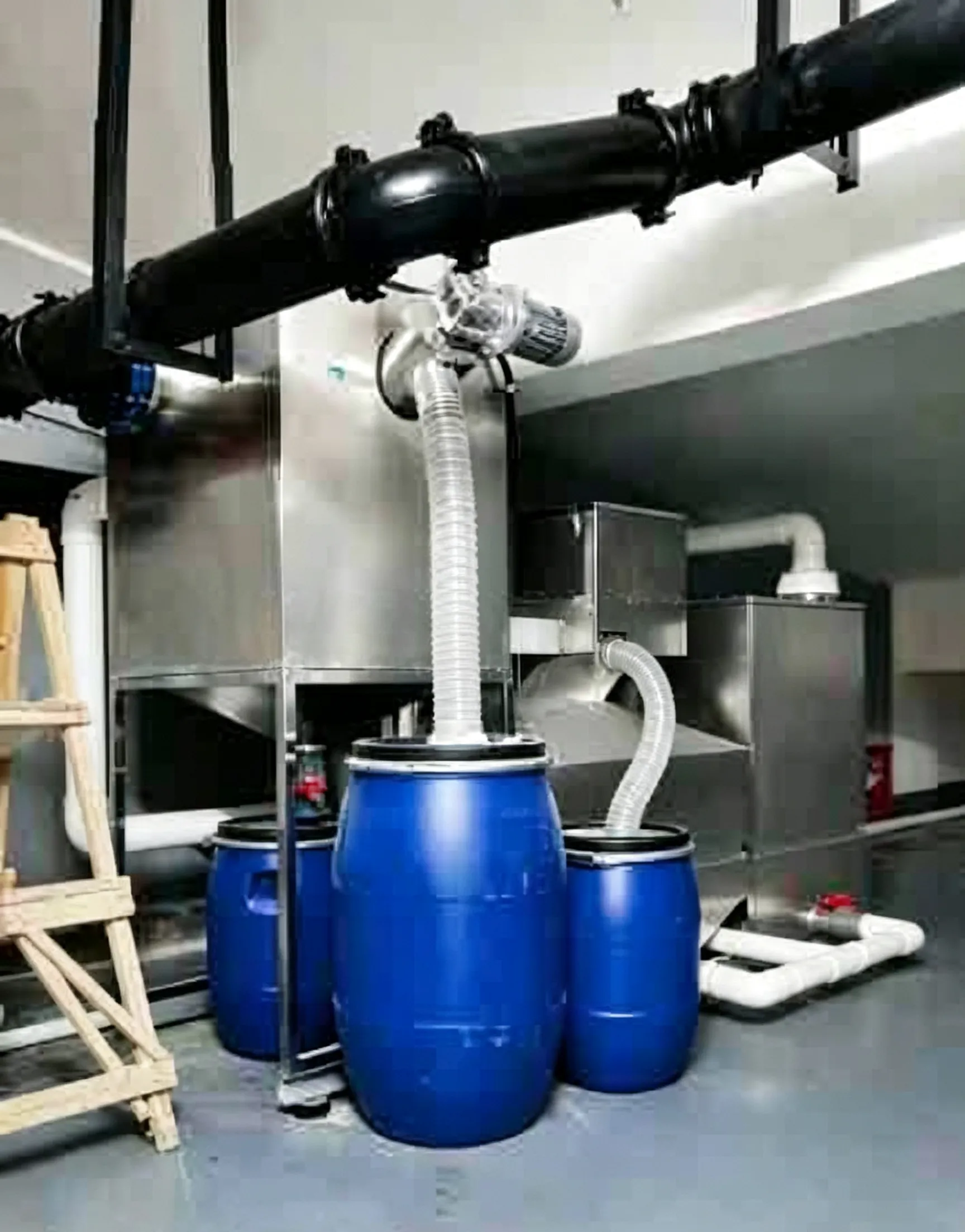
Tieshanyuan’s integrated grease separation and lifting equipment combines grease treatment and wastewater lifting functions into a single unit—a key reason why many food service projects choose this type of equipment. On one hand, it pre-treats kitchen wastewater by capturing solid food scraps and separating floating grease, thereby preventing grease from entering the piping network directly. On the other hand, the built-in lifting unit pumps the treated wastewater to higher-elevation municipal drainage pipes, solving drainage challenges in basements and other low-lying areas while reducing the need for extensive civil excavation work.
Basic equipment workflow: After entering the equipment tank, kitchen wastewater first passes through a screening zone where food scraps are captured and diverted into a waste bin. Gravity separation allows oil and water to stratify; floating grease rises to a collection zone, where an automatic skimming mechanism scrapes it into an oil collection container. The grease-separated wastewater then flows into the lifting chamber; once the water level reaches a preset point, the lifting assembly activates to pump the wastewater out. Accumulated scraps and grease must be cleaned out regularly to ensure the equipment continues to operate normally.
The equipment comes in standard sizes but can also be customized. Key factors for model selection include: hourly treatment capacity, peak drainage flow rate, available installation space (length, width, and height), and the positioning of inlet and outlet pipes. The equipment housing size scales with the volume of water to be treated; however, adjustments can be made to suit specific site conditions where installation space is limited. During the preliminary project phase, we review site drawings or conduct on-site assessments to calculate the required flow rate. We then finalize the equipment dimensions to ensure smooth delivery, proper installation, and ease of future maintenance.
Our integrated grease separation and lifting units feature a main body constructed from SUS304 stainless steel and a sealed housing design that minimizes odor emissions. Equipped with a PLC control module, the system provides operational status updates and fault alerts, simplifying on-site operation and maintenance. These units are suitable for a wide range of applications, including hotels, banquet halls, school cafeterias, and commercial dining facilities.
During the project coordination phase, we provide technical support—such as model selection guidance and dimension verification—tailored to the client's specific discharge volume and installation space constraints. Moving forward, we remain committed to optimizing our commercial foodservice water treatment equipment and providing comprehensive hardware and technical support for diverse dining projects.